
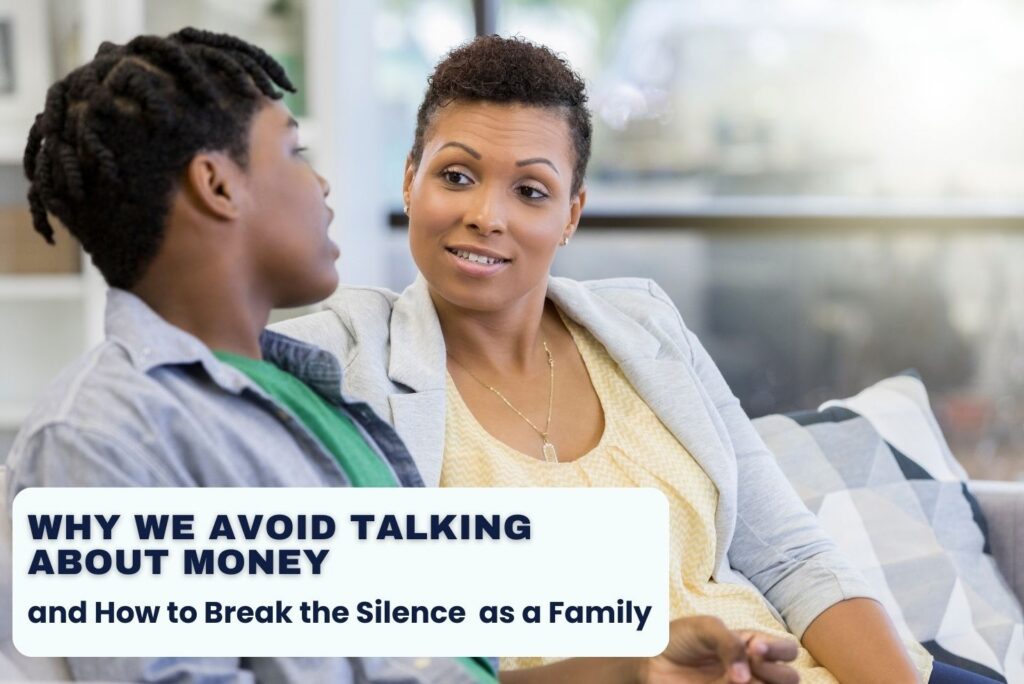
Many Kenyan families avoid talking about money due to culture, emotions, and fear. Learn why money silence exists and how families can start healthier conversations safely
In many families, money is everywhere, but rarely discussed.
It influences where we live, the schools our children attend, the help we give to relatives, and the stress we carry quietly. Yet for something so central to daily life, money remains one of the most avoided topics in Kenyan households.
At Finance4Families (F4F), we often see this pattern: families are working hard, earning, spending, and supporting others but not talking. And over time, silence becomes costly.
Why Money Feels Like a Dangerous Conversation
Money is more than numbers. It is emotional, cultural, and deeply personal. For many Kenyan families, the discomfort around money conversations did not start with them, it was inherited.
1. Cultural Conditioning: “Money Is Private”
Many of us grew up in homes where children were told, “Haya mambo ya pesa si ya watoto.” Money was handled behind closed doors, often by one person, usually without explanation.
The result? Adults who were never taught how money works – only that it should not be questioned. Talking about money now feels like crossing an invisible line of disrespect or exposure.
2. Fear of Conflict or Judgment
Money conversations can feel risky. People worry that honesty will lead to arguments, blame, or shame.
Questions like:
-
“Why do you spend like that?”
-
“Why don’t we have savings?”
-
“Why are we always struggling?”
…can easily trigger defensiveness. To avoid conflict, many families choose silence. Unfortunately, silence does not remove the problem, it allows it to grow quietly.
3. Generational Trauma and Financial Scarcity
Some families have lived through long periods of financial struggle. For them, money carries fear, loss, and survival.
Talking about money can reopen wounds:
-
Past debts
-
Failed businesses
-
Lost opportunities
Avoidance becomes a coping mechanism—one that feels safer than confronting painful realities.
4. Power and Control Dynamics
In some households, one person controls the finances. This can be due to tradition, income differences, or convenience.
Over time, this creates imbalance. One person feels burdened, the other feels excluded. Without conversation, resentment builds even when intentions are good.
The Cost of Not Talking About Money
When families don’t talk about money:
-
Goals remain unclear
-
Responsibilities are assumed, not agreed
-
Children grow up financially unprepared
-
Financial stress turns emotional
Money silence doesn’t protect families—it weakens them.
How to Break the Silence (Safely and Gently)
Breaking money silence does not require confrontation or spreadsheets. It requires intention.
1. Start With Values, Not Numbers
Begin with questions like:
-
“What does financial security mean to us?”
-
“What kind of future do we want for our family?”
Values create common ground. Numbers can come later.
2. Choose the Right Time and Space
Avoid money talks during conflict or stress. Instead, schedule calm moments after dinner, during a walk, or in a planned family meeting.
A relaxed environment lowers emotional defenses.
3. Normalize Learning Together
It’s okay not to have all the answers. Money conversations should not be exams, they should be learning spaces.
Saying “Let’s figure this out together” changes the tone from blame to teamwork.
4. Involve Children Appropriately
Children don’t need details, but they need exposure. Simple discussions about saving, budgeting, and goals help raise financially confident adults.
Silence today creates confusion tomorrow.
5. Get Support When Needed
Sometimes families need a neutral guide. Money conversations can be emotional, especially when patterns are deeply rooted.
This is where coaching helps, not to judge, but to structure safe conversations and practical steps forward.
The F4F Approach: Conversations That Build Families
At Finance4Families, we help families move from money silence to money clarity.
Through our Family and Couples Financial Coaching, we support you to:
-
Start money conversations safely
-
Clarify roles and expectations
-
Build shared financial goals
-
Create practical plans for budgeting, saving, investing, protection, and legacy
Because strong families are built on trust and trust grows through honest conversation.
Final Reflection
Talking about money does not create problems.
Avoiding it does.
The moment your family starts talking openly about money is the moment financial stress begins to lose its power.
Start gently. Start honestly.
And most importantly… start together.